Scientific Equipment
Contact Us
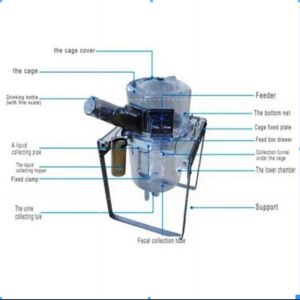
Metabolic cages are specialized enclosures used in scientific research to measure various aspects of metabolism in rats and mice. These cages are designed to allow researchers to monitor factors such as:
Food and water intake: Metabolic cages typically have separate compartments for food and water, allowing precise measurement of consumption over time.
Urine and feces collection: They are equipped with collection devices to gather urine and feces, enabling the measurement of metabolites, hormone levels, and other biochemical markers.
Activity monitoring: Many metabolic cages are equipped with sensors or cameras to track the animal's movement and activity levels, providing insights into energy expenditure and overall metabolic rate.
Respiratory measurements: Some advanced metabolic cages can also measure oxygen consumption and carbon dioxide production, which are important indicators of metabolic activity.
Overall, metabolic cages provide a controlled environment for studying the metabolic processes of rodents under various experimental conditions, helping researchers understand aspects of nutrition, physiology, pharmacology, and disease. MILTON ENTERPRISES, Nashik Contact Us
Isolated Organ Bath An isolated organ bath is an apparatus used to study the function of an isolated organ or tissue sample in a controlled environment. This setup allows for precise control over the experimental conditions, such as temperature, oxygenation, and the addition of drugs.
Components and Function:
Organ Chamber: A glass or plastic bath that holds the isolated tissue or organ. It is filled with a physiological solution that mimics the body's internal environment. Aeration System: Provides oxygen to keep the tissue alive and functional.
Heating System: Maintains the physiological solution at a constant, appropriate temperature.
Force Transducer: Measures the contractions or responses of the tissue and converts them into electrical signals.
Recording System: Captures the data from the force transducer, often interfaced with a computer for analysis.
Uses in Pharmacology:
Drug Response Testing: By adding different drugs to the bath, researchers can study their direct effects on the tissue, such as contractions in smooth muscle or changes in vascular tone.
Mechanistic Studies: Helps in understanding the mechanisms of drug action, receptor activity, and signaling pathways within tissues. Applications Both the kymograph and the isolated organ bath are essential tools in pharmacological research.
They allow scientists to: Investigate the direct effects of drugs on isolated tissues. Analyze the physiological changes induced by pharmacological agents. Understand the underlying mechanisms of drug action and tissue response.MILTON ENTERPRISES, Nashik Contact Us
The Narrow Beam Apparatus is a valuable tool in behavioral neuroscience and pharmacology due to its ability to provide precise and quantifiable assessments of motor function. Its applications include:
Drug Development: Screening and evaluating the effects of pharmacological agents on motor coordination and balance.
Neurological Research: Studying the progression and treatment of neurological and neurodegenerative diseases.
Genetic Studies: Understanding the genetic basis of motor function and the impact of genetic modifications.
Toxicology: Assessing the neurotoxic effects of environmental and chemical agents. MILTON ENTERPRISES, Nashik Contact Us
The Vogel Test (Lick-O-Meter) is a valuable tool in pharmacological research for assessing the anxiolytic and anxiogenic effects of various compounds in rodents. By measuring changes in licking behavior under a conflict situation, researchers can gain insights into the anxiety-modulating properties of the test compounds. The procedure involves baseline measurement, administration of test compounds, a conflict session with shocks, and detailed data analysis to interpret the behavioral outcomes. MILTON ENTERPRISES, Nashik Contact Us
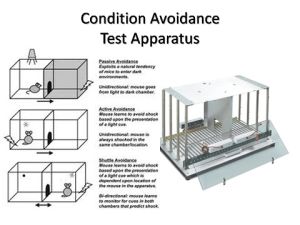
The Conditioned Avoidance Test Apparatus is a behavioral experimental setup used to study learning, memory, and anxiety in animals, typically rodents. The apparatus generally consists of a chamber divided into two or more compartments. One compartment is designated as the "safe" zone, while the other is associated with an aversive stimulus, such as a mild electric shock.
During the test, the animal learns to associate certain cues (such as a light or sound) with the impending aversive stimulus. The animal's ability to avoid the aversive compartment in response to these cues is measured to assess its learning and memory capabilities. This apparatus is commonly used in research on neuropharmacology, cognitive function, and the effects of various drugs or treatments on anxiety-related behaviors. MILTON ENTERPRISES, Nashik Contact Us
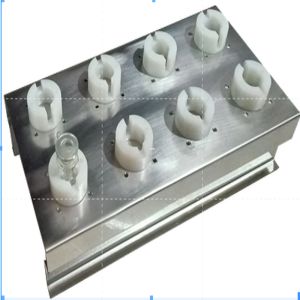
Milton Enterprises Manufacturing reinvented Semi Automatic Sampling System with Diffusion Cell Apparatus is used to study of trans-dermal properties of pharmaceutical substances in the pharmacy colleges, medical research institutes and pharmaceutical industries. Having 6â??stages & 8-stages Motorless Stirring Drives, user can drive each stirrer stage at different RPM from 100 RPM to 1000 RPM, diffusion cell apparatus provided with water circulation system to maintain uniform temperature throughout all diffusion cells, water circulation system consists of water circulation pump which circulate water to all diffusion cells, and get back to maintain temperature. MILTON ENTERPRISES, Nashik Contact Us
When Pharmaceutical Industry Start Dealing With Trans- Dermal / Tropical Products, It Is One Of The Most Very Important Part That They Will Have Somany Questions As,how To Start.what Types Of Media Should Be Used.which Membrane Should Be Suitable For Our Us.proper Procedures Of IVRT.before IVPT What Should Be Done.proper Guidelines For Diffusion Process.proper Guidelines For Permiation Process.what Should Berequired As Apparatus For IVRT.what Sample Amount Should Be For IVRT & IVPT. MILTON ENTERPRISES, Nashik Contact Us
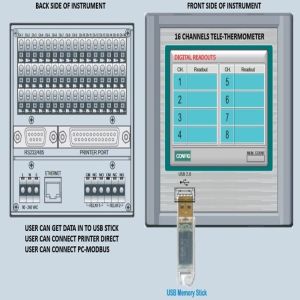
A telethermometer, also known as a telethermocouple, is a type of thermometer that uses a thermocouple to measure temperature remotely. In the context of a pyrogen test, which is a test to detect fever-causing substances, a telethermometer can be used to monitor the temperature of a test solution or a biological sample from a distance.
During a pyrogen test, substances are injected into the sample being tested to see if they induce a fever response. By using a telethermometer, the temperature of the sample can be continuously monitored without the need for physical contact, ensuring accurate and real-time temperature readings. This remote monitoring capability is particularly useful in maintaining the integrity of the test and minimizing the risk of contamination or interference with the sample. Additionally, it allows for greater convenience and efficiency in conducting the test, as researchers can monitor multiple samples simultaneously from a central location. MILTON ENTERPRISES, Nashik Contact Us
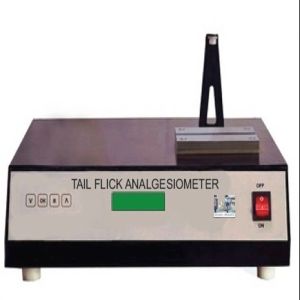
The tail flick analgesimeter is a widely used instrument in pharmaceutical research for assessing the pain threshold and analgesic (pain-relieving) efficacy of drugs in rodents, typically rats and mice. Here's how it is used and its significance in research: Assessment of Pain Sensitivity: The tail flick test measures the pain sensitivity of rodents by applying a noxious thermal stimulus to the animal's tail and recording the latency to respond by flicking or withdrawing the tail. This response is a reflexive action to avoid the painful stimulus. Testing Analgesic Drugs: The primary use of the tail flick analgesimeter is to evaluate the efficacy of analgesic compounds. By comparing the response latency before and after drug administration, researchers can determine how effectively a drug increases the pain threshold. An effective analgesic will increase the latency to tail flick, indicating reduced pain perception. Dose-Response Studies: Researchers use the tail flick test to conduct dose-response studies, which involve administering different doses of an analgesic and measuring the corresponding changes in tail flick latency. This helps determine the optimal dose and potency of the drug. Mechanistic Studies: The tail flick test can be used to investigate the mechanisms of action of analgesic drugs. By using the test in combination with receptor agonists or antagonists, or genetic modifications, researchers can study the involvement of specific neurotransmitter systems (e.g., opioid, serotonin, GABA) in mediating the drug's analgesic effects. Comparative Studies: The tail flick analgesimeter allows for comparative studies of different analgesic agents or formulations. This is important for developing new pain relief medications and determining their relative efficacy compared to existing treatments. Chronic Pain Models: The tail flick test can be adapted for use in chronic pain models to evaluate the effectiveness of analgesic drugs over longer periods. This is useful for studying the potential of drugs to treat chronic pain conditions in humans. Behavioral Phenotyping: The tail flick test is part of a suite of behavioral assays used for phenotyping genetically modified rodents. It helps in understanding how genetic alterations affect pain sensitivity and analgesic responses. Validation of Pain Models: The tail flick test is used to validate animal models of pain. By demonstrating consistent pain responses and analgesic effects, researchers can establish the reliability of their models for studying pain and developing new treatments. Procedure Overview Preparation: The rodent is typically restrained gently to minimize movement without causing stress. Application of Stimulus: A focused beam of light or a heated element is applied to a specific part of the tail. Measurement: The time taken (latency) for the rodent to flick or withdraw its tail from the heat source is recorded. Data Analysis: The latency is compared across different conditions, such as before and after drug administration, to assess changes in pain sensitivity. MILTON ENTERPRISES, Nashik Contact Us
The Radial Arm Maze (RAM) is a widely used behavioral test in pharmacology and neuroscience research to study spatial learning and memory in rodents, typically rats and mice. Here are the primary uses of the Radial Arm Maze in pharmacology research: Assessment of Spatial Memory: The RAM is designed to evaluate an animal's ability to remember and navigate to specific arms to obtain rewards (usually food). The maze typically consists of multiple arms (often eight) radiating from a central platform. Successful navigation with minimal errors indicates good spatial memory. Studying Learning Processes: Researchers use the RAM to study the learning processes in rodents. By repeatedly testing animals over several trials, researchers can assess how quickly and efficiently the animals learn to remember the locations of the rewards, providing insights into the cognitive processes involved in learning. Evaluation of Cognitive Enhancers: The RAM is used to evaluate the efficacy of cognitive enhancers, such as nootropic drugs. These substances are tested for their ability to improve learning and memory performance in the maze. Improved performance after drug administration suggests potential cognitive-enhancing effects. Assessment of Cognitive Impairment: The RAM is also used to model cognitive impairments associated with conditions such as Alzheimer's disease, aging, schizophrenia, and other neurodegenerative or psychiatric disorders. By observing deficits in maze performance, researchers can study the underlying mechanisms of these conditions and evaluate potential treatments. Pharmacological Studies: The RAM is employed to investigate the effects of various pharmacological agents on cognitive functions. Researchers can study how different classes of drugs, such as cholinergic agents, glutamatergic modulators, or neuroprotective compounds, influence spatial memory and learning. Neurobiological Research: Using the RAM, researchers can explore the neurobiological mechanisms underlying learning and memory. This includes studying the role of specific brain regions (e.g., hippocampus, prefrontal cortex), neurotransmitter systems, and signaling pathways involved in cognitive functions. Genetic Studies: The RAM is used to assess the impact of genetic modifications on cognitive abilities. By comparing the performance of wild-type and genetically modified animals, researchers can identify genes that play critical roles in learning and memory. Longitudinal Studies: The RAM allows for longitudinal studies to assess how cognitive abilities change over time in response to aging, chronic drug treatment, or environmental factors. This helps in understanding the progression of cognitive decline and the long-term effects of interventions. Behavioral Phenotyping: The RAM is part of a comprehensive battery of behavioral tests used for phenotyping rodent models. It provides valuable data on the cognitive phenotype of different strains or genetically engineered models, contributing to a better understanding of the genetic basis of cognitive functions. MILTON ENTERPRISES, Nashik Contact Us
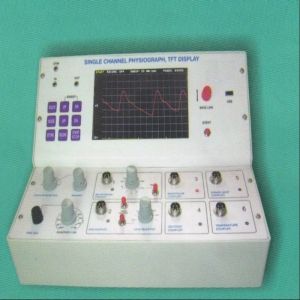
A student physiograph, also known as a kymograph or physiological recording system, is a laboratory instrument used in physiology and biomedical research to record and analyze physiological signals and responses. Here's how it's used: Recording Physiological Signals: A student physiograph records various physiological signals such as heart rate, blood pressure, respiratory rate, muscle contractions, and electrical activity of the heart (ECG) or brain (EEG). These signals are typically measured using sensors or transducers that convert physiological phenomena into electrical signals. Experimental Setup: Researchers set up experiments by attaching sensors or electrodes to the subject (e.g., human, animal, or tissue preparation) to measure specific physiological parameters. The signals from these sensors are then transmitted to the physiograph for recording and analysis. Data Visualization: The physiograph records physiological signals over time, displaying them graphically on a rotating drum or digital screen. This allows researchers to visualize and analyze changes in physiological parameters in response to experimental manipulations, interventions, or stimuli. Data Analysis: Physiological recordings obtained from the student physiograph can be analyzed to extract various parameters such as amplitude, frequency, duration, and latency of physiological responses. This data analysis helps researchers quantify and interpret the physiological effects of experimental conditions or treatments. Teaching Tool: Student physiographs are commonly used in educational settings, such as undergraduate physiology or biomedical science laboratories, to teach students fundamental principles of physiological measurement, experimental design, and data analysis. Students learn how to set up experiments, record physiological signals, and interpret the results. Research Applications: In research laboratories, student physiographs are used for conducting experiments to investigate physiological mechanisms, pathophysiology of disease, effects of drugs or interventions, and responses to environmental stimuli. They are valuable tools for generating data that contributes to scientific understanding and medical advancements. Demonstration of Biological Concepts: Physiographs can also be used for demonstration purposes in public outreach events or scientific presentations. By recording and displaying physiological responses in real-time, researchers can illustrate biological concepts and engage audiences in understanding the complexity of living systems. MILTON ENTERPRISES, Nashik Contact Us
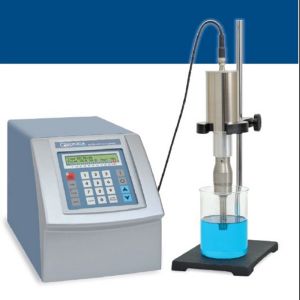
An ultra probe sonicator is widely used in pharmaceutical laboratories for various applications, including: Homogenization: Breaking down particle sizes to create uniform mixtures. Cell Disruption: Lysing cells to extract intracellular contents. Emulsification: Creating stable emulsions of immiscible liquids. Dispersion: Distributing nanoparticles evenly in suspensions. Degassing: Removing dissolved gases from liquids. These processes are crucial for the preparation and formulation of pharmaceutical products, ensuring consistency, efficacy, and quality of the final products. MILTON ENTERPRISES, Nashik Contact Us
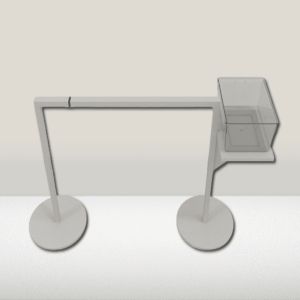
Milton Enterprises introduces advanced tablet hardness tester, which having three kind of unit to display result as per select by user as Kg / Ib / N, battery backup facility provided to avoid interruption in experiment due to electricity failure, without peak and auto peak facility has provided to get break point of tablet automatically, dual sided screen resolution provided to comfort to see from front end and back end to user, in addition to all these features Laboratory enterprises provides PC connectivity but it is optional by this facility user can configure instrument as their desire and walk out for another task .
Features :
Battery backup facility.
Reading will be measure in Kg / Ib & N units which is select by user at the time of operation.
Capacity: 100Kg.
Tablet Size: 2 mm to 30 mm.
Readability: 0.1Kg.
Accuracy: +/- 0.5%.
Overload Capacity: 120%.
Optional :
PC connectivity Software.
Save reading automatic.
Save graph in jpg/png format.
Reading can get in excel Sheet also. MILTON ENTERPRISES, Nashik Contact Us
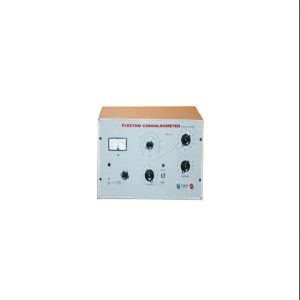
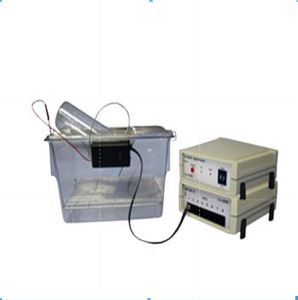
Electroconvulsometer is an instrument used in pharmacology and neuroscience research to induce and measure convulsions (seizures) in animal models. This device is primarily used in the study of epilepsy, seizure thresholds, and the efficacy of anticonvulsant drugs. Key Uses of an Electroconvulsometer: Seizure Induction: The device delivers controlled electrical stimuli to animals, typically rodents, to induce seizures. This is crucial for testing the efficacy of potential anticonvulsant medications. Measurement of Seizure Activity: By recording the onset, duration, and intensity of seizures, researchers can evaluate the pharmacological effects of different substances on seizure activity. Threshold Determination: It helps determine the seizure threshold the minimum electrical stimulus required to induce a seizure. Changes in the seizure threshold can indicate the effectiveness of anticonvulsant treatments. Components of an Electroconvulsometer: Electrodes: Placed on the animal to deliver electrical pulses. Stimulus Controller: Regulates the intensity, duration, and frequency of the electrical stimulus. Recording System: Monitors and records the physiological responses, such as muscle contractions and brain activity. Applications: Anticonvulsant Drug Testing: Evaluating new drugs for their ability to prevent or reduce the severity of seizures. Epilepsy Research: Understanding the mechanisms underlying epileptic seizures and testing potential therapeutic interventions. Neuropharmacology: Studying the effects of various pharmacological agents on brain function and seizure activity. MILTON ENTERPRISES, Nashik Contact Us
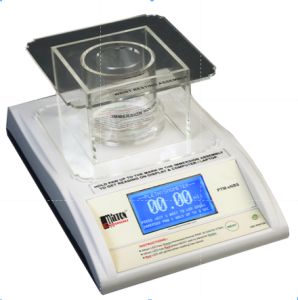
digital plethysmometer can indeed be used to measure paw edema in laboratory animals, particularly rodents. Paw edema refers to swelling in the paw, often induced in research settings to study inflammation and test the efficacy of anti-inflammatory drugs. The plethysmometer measures the increase in paw volume due to edema by quantifying changes in the displacement of liquid within a chamber or by using other similar principles. This provides researchers with quantitative data on the extent of edema and helps assess the effectiveness of various treatments or interventions. MILTON ENTERPRISES, Nashik
X
Post Your Requirement
{{inquiryMessage}}
|

.png "Digital Isolated Organ Bath System in")


.png "Digital Tablet Hardness Tester in")